From Research to Reform — Building Better Fisheries Governance in South Korea
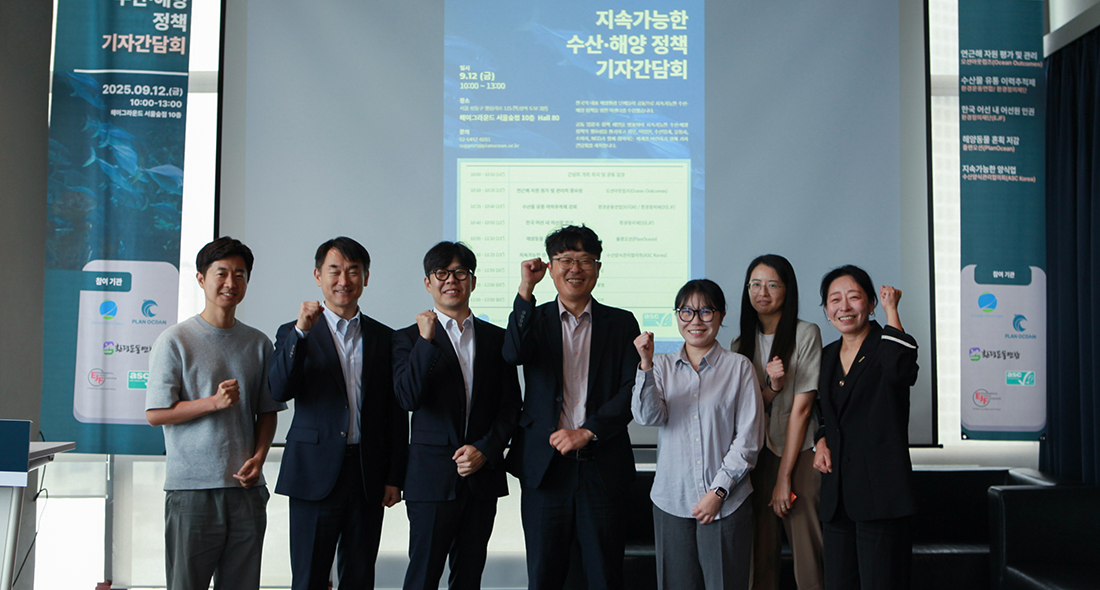
From left to right: Kwonpil Jeong - Reporter from Joongang Ilbo, Martin Lee - ASC Korea General Manager, Doohyun Park - O2 Korea Senior Fisheries Manager, Dongho Kim - Fisheries Reporter from The Agriculture, Fisheries & Livestock News, Yoojin Song - Campaigner from KFEM, Ji Yoon Kim - Global Reporter from NEWSTAPA, Youngran Lee - Plan Ocean CEO & Founder.
Ocean Outcomes (O2) has worked alongside seafood companies, governments, scientists, and fishing communities across South Korea to improve fisheries sustainability.
From Marine Stewardship Council Certification projects and convening the Korean Roundtable for Sustainable Tuna Fishing, to advancing electronic monitoring (EM) and strengthening labor conditions aboard fishing vessels, one lesson has become increasingly clear: lasting improvements in fisheries depend on more than individual projects or technologies — they depend on strong governance.
The most effective fisheries management systems are built on reliable data, independent scientific advice, transparent decision-making, and meaningful collaboration between government, industry, researchers, and civil society.
Recognizing this, O2 — alongside a multi-disciplinary advisory body of scientists, former government officials, NGOs, and academic experts — launched an ambitious initiative focused not on a single fishery, but on strengthening the institutions that govern fisheries across South Korea. Through peer-reviewed research, multi-stakeholder collaboration, policy engagement, and public outreach, we are building momentum toward a more transparent, science-based fisheries management system.
Closing the Gap Between Science and Management

South Korea is one of the world's leading fishing nations. Its distant-water fleets supply seafood to markets around the world, while its domestic fisheries support coastal communities, national food security, and an industry worth billions of dollars each year. At the same time, Korean fisheries face growing pressure to meet international expectations for sustainability, transparency, and accountability.
Through years of working alongside industry, government, and other partners in Korea, O2 saw that many of the building blocks of effective fisheries management were already in place. However, data collection systems remained fragmented, scientific advice was not always clearly separated from management decisions, information was often difficult for stakeholders and the public to access, and emerging tools like EM were being introduced without the governance frameworks needed to fully realize their potential.
Rather than tackling these challenges one fishery at a time, we began asking a broader question: How could South Korea bridge the gap between its ambitions for science-based fisheries management and the systems needed to deliver it?
That question became the foundation for a comprehensive comparative study examining how the South Korean Total Allowable Catch (TAC) system compares with fisheries governance systems in the United States, Australia, and Japan.
What the Research Revealed
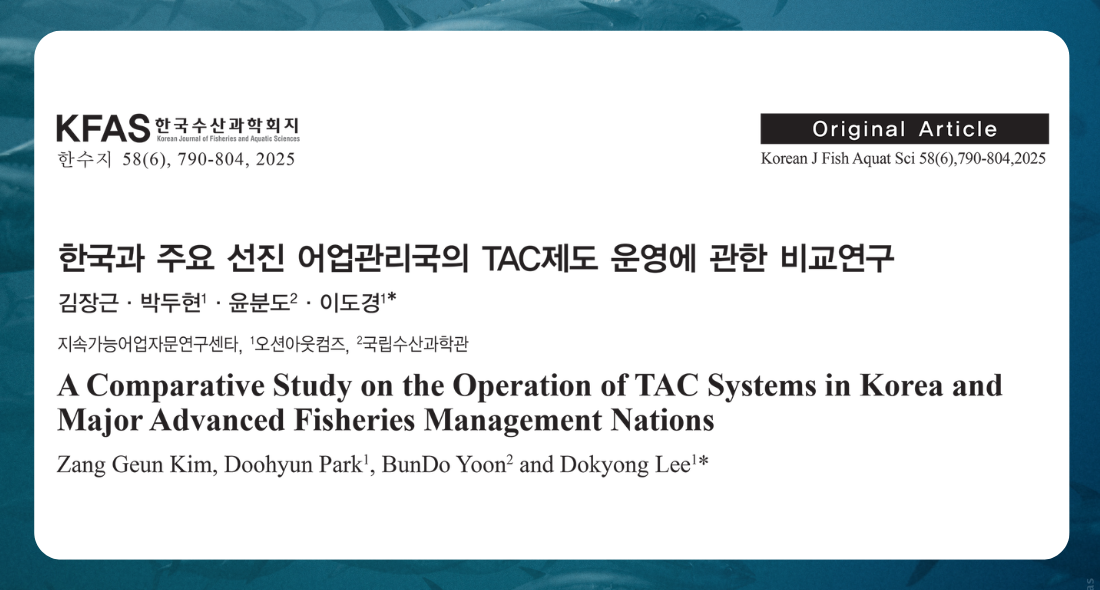
Data collection programs exist. Stock assessments are conducted. Scientific advice informs management decisions. Catch limits are increasingly being expanded to an increasing number of fisheries and species. The challenge is that these components do not yet function as a single integrated management process consistent with internationally recognized and agreed principles and practices of fisheries management.
For example, catch information may pass through multiple reporting systems before reaching government databases, making independent verification difficult. Insufficient data and limited biological sampling can reduce confidence in stock assessments, while the absence of legally established scientific advisory bodies makes it harder to separate scientific recommendations from management decisions.
The study also found that Korea lacks integrated Fisheries Management Plans that clearly connect harvest strategies, monitoring programs, implementation responsibilities, and long-term management objectives.
By comparison, countries such as the United States and Australia have institutionalized these processes through independent scientific committees, standardized monitoring frameworks, transparent decision-making processes, and long-term fisheries management plans. Japan's recent fisheries reforms also offer an important regional example of how science-based harvest strategies can be integrated into existing governance systems.
Building a Community for Reform
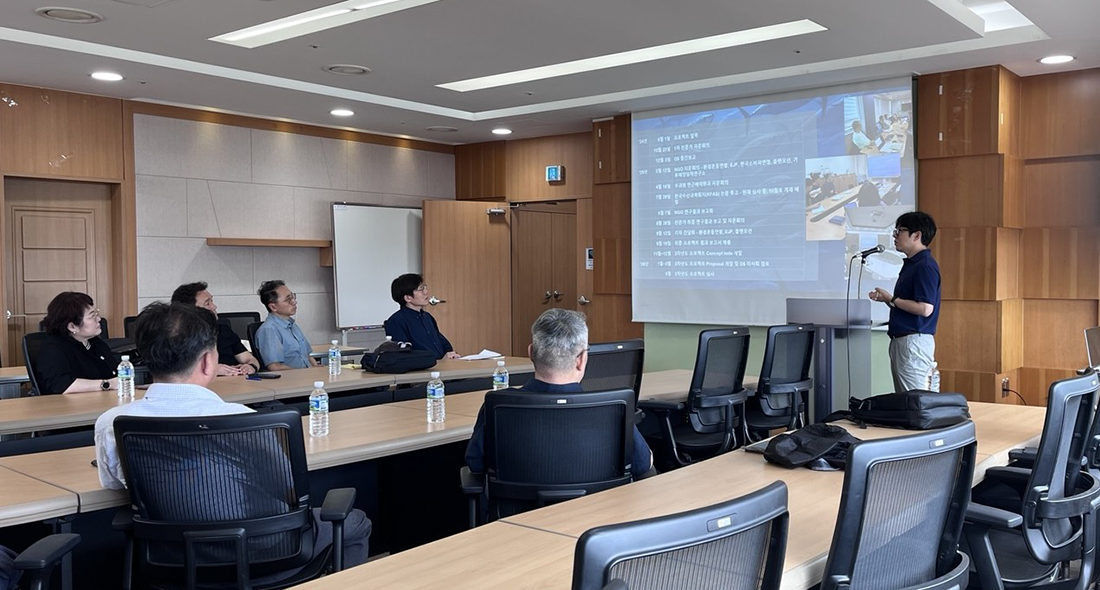
Doohyun Park speaks to the project advisory group in August 2025.
While publishing a research paper is one step, ensuring its findings reach the people who can act on them is another. That’s why O2 built a multi-disciplinary advisory group spanning senior scientists, former government officials, and civil society representatives from organizations including Environmental Justice Foundation, Korea Federation for Environmental Movement, Plan Ocean, Climate Ocean Research Institute, and the Korea Consumer Federation.
Over the course of a year, the group went beyond simply reviewing research findings. Participants challenged assumptions, identified practical implementation barriers, and contributed perspectives that only emerge through years of experience working within Korea's fisheries sector.
Those discussions surfaced issues ranging from inconsistent data verification procedures and fragmented governance responsibilities to the need for stronger quality assurance systems and more independent scientific advisory processes. The conversations also helped ensure that recommendations were not only scientifically rigorous, but politically and institutionally realistic.
Electronic Monitoring as Part of Better Governance
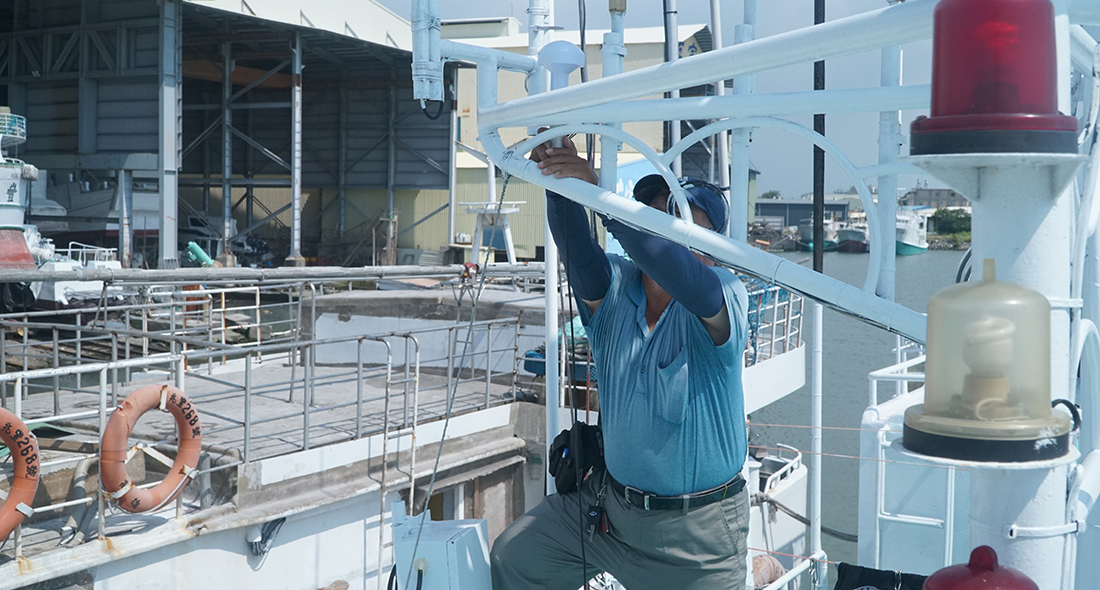
EM became an important part of the project's broader governance work. In 2025, O2 helped convene regional discussions on EM through a 40-person workshop alongside the Our Ocean Conference in Busan and a technical side event at The Sustainable Seafood Summit in Osaka. These conversations brought together governments, NGOs, industry, and technology experts to explore how EM can strengthen fisheries management — not just through better technology, but through stronger governance, standardized reporting, and internationally aligned implementation.
Building on these regional discussions, O2 also brought Korean NGOs and fisheries experts together to assess the country's EM pilots and identify the institutional changes needed for long-term success. The group's recommendations emphasized independent data review, quality assurance, vessel monitoring plans, and greater transparency, reinforcing a key conclusion of the project: technology alone does not improve fisheries management, effective governance does.
From Strong Components to a Stronger System
Drawing on both the comparative research and extensive stakeholder engagement, a set of recommendations was developed to strengthen Korea's fisheries governance over the long term.
The recommendations focus on five priorities:
- Establishing standardized, independently verifiable fisheries data collection systems.
- Incorporating precautionary approaches into stock assessment and harvest decisions.
- Legally mandating independent scientific advisory bodies to strengthen transparency and credibility.
- Developing standardized Fisheries Management Plans that integrate harvest strategies, monitoring, and implementation.
- Harmonizing fisheries legislation to reduce overlapping responsibilities and improve institutional coordination.
Together, these reforms outline a pathway toward an integrated, science-driven governance model capable of ensuring the long-term sustainability of Korean fisheries and the livelihoods of the fishing communities that depend on them.
Building Momentum for Reform
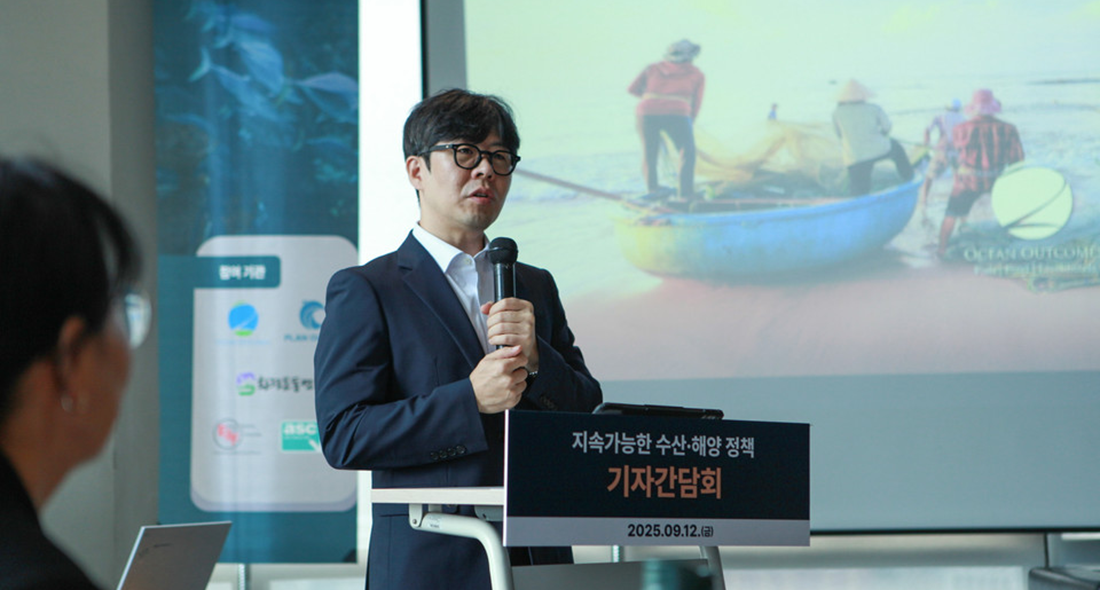
Doohyun Park speaks at the National Press Briefing in Seoul.
One of the project's greatest successes was moving fisheries governance beyond technical discussions and into the national conversation. In September 2025, O2 joined a coalition of NGOs to publicly present the findings through a national press briefing in Seoul. The event generated coverage across seven Korean media outlets, bringing greater public attention to issues including fisheries transparency, data quality, bycatch, labor protections, and EM.
That visibility also prompted direct engagement from the Korean National Assembly. Representative Ok-joo Song requested technical input from O2 to support parliamentary oversight of fisheries management and submitted detailed questions to the Ministry of Oceans and Fisheries covering data collection, TAC implementation, stock assessments, and monitoring systems.
This represented an important project milestone: independent scientific analysis informing national policy discussions.
Looking Ahead
This work represents the beginning of O2's growing fisheries governance efforts in South Korea.
Building on the foundation established through this project, O2 is now working with partners to develop a multi-year Fisheries Governance Reform Roadmap that will help translate these recommendations into lasting institutional change. The next phase aims to strengthen public access to fisheries information, support independent scientific advisory bodies, improve Fisheries Management Plans, integrate transparency and electronic monitoring into national management systems, and advance legal reforms that will help modernize Korea's fisheries governance over the coming decade.
As South Korea prepares to co-host the 2028 United Nations Ocean Conference and continues expanding its leadership in sustainable seafood, strengthening domestic fisheries governance has never been more important.