Global Tuna Fisheries to See Major Expansion of Crew Connectivity to Enable Worker Protections
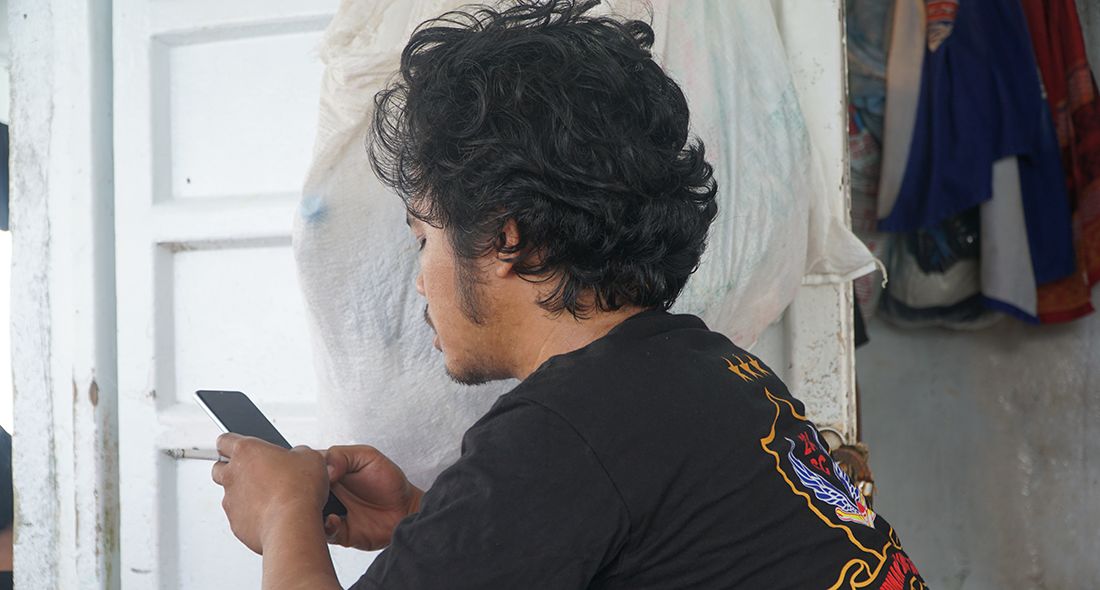
Conservation International and Ocean Outcomes announced today a new $3.23 million grant from the Walmart Foundation that will help scale a first-of-its-kind effort to bring reliable Wi-Fi connectivity and strengthened labor protections to industrial tuna fishing vessels.
ARLINGTON, Va. – The initiative addresses long-standing gaps in worker protections and accountability across fisheries operating on the high seas.
Work to date has demonstrated that onboard Wi‑Fi connectivity gives fishers a reliable way to communicate while at sea, helping them stay in touch with family members, access support services, and raise workplace concerns through trusted channels. This improved connectivity can help identify labor concerns earlier, enabling more timely responses to worker grievances and strengthening efforts to prevent serious abuses, including forced labor.
“Worker wellbeing and ocean sustainability are deeply interconnected,” said Juno Fitzpatrick, Senior Director of Human Rights and Ocean Equity at Conservation International. “By ensuring fishers have access to reliable connectivity and safe channels to raise concerns, we can strengthen accountability and safety at sea and build more responsible, transparent seafood supply chains.”
Through partnerships with civil society and worker organizations, Conservation International and Ocean Outcomes will use improved access to Wi-Fi to support stronger worker protections by linking onboard connectivity to trusted grievance mechanisms, establishing vessel-based Crew Committees, and enabling safe use of Wi-Fi. Working with tuna suppliers and industry partners, the effort will establish a framework for scaling connectivity across some of the highest-risk tuna fleets globally.
The project will also help demonstrate a practical pathway for companies seeking to strengthen responsible sourcing practices and meet growing human rights due diligence expectations. By improving transparency and communication at sea, the initiative can help seafood buyers, suppliers and vessel owners better identify risks, respond to worker concerns, and strengthen accountability throughout the supply chain.
“For those working at sea, Wi-Fi is a lifeline. It enables workers to connect to family and friends, access employment resources, and report issues and receive timely resolution,” said Gabby Lout, who leads the work for Ocean Outcomes. “What’s compelling is that this technology can benefit both people and planet while delivering business value across the supply chain – supporting traceability, transparency, and improved worker welfare, ultimately building more resilient seafood supply chains.”
This project brings together industry leaders, civil society organizations, worker groups, and technology partners across key tuna fishing geographies, such as Taiwan, South Korea, the Republic of the Marshall Islands, Fiji, Samoa, Palau, American Samoa, South Africa, and Mauritius.
By aligning market incentives, governance frameworks, and emerging technologies, the project aims to make crew connectivity a standard expectation, rather than an exception, in global fisheries.
About Conservation International: Conservation International protects nature for the benefit of humanity. Through science, policy, fieldwork and finance, we spotlight and secure the most important places in nature for the climate, for biodiversity and for people. With offices in 30 countries and projects in more than 100 countries, Conservation International partners with governments, companies, civil society, Indigenous peoples and local communities to help people and nature thrive together.
About Ocean Outcomes: Ocean Outcomes (O2) is a mission-driven technical partner that improves fisheries and seafood supply chains worldwide. Working alongside fishing communities, seafood businesses, governments, and NGOs, O2 develops and implements practical solutions that advance environmental sustainability, strengthen labor conditions, and support resilient fisheries.