Electronic Monitoring
From pilots to policy — scaling Electronic Monitoring systems
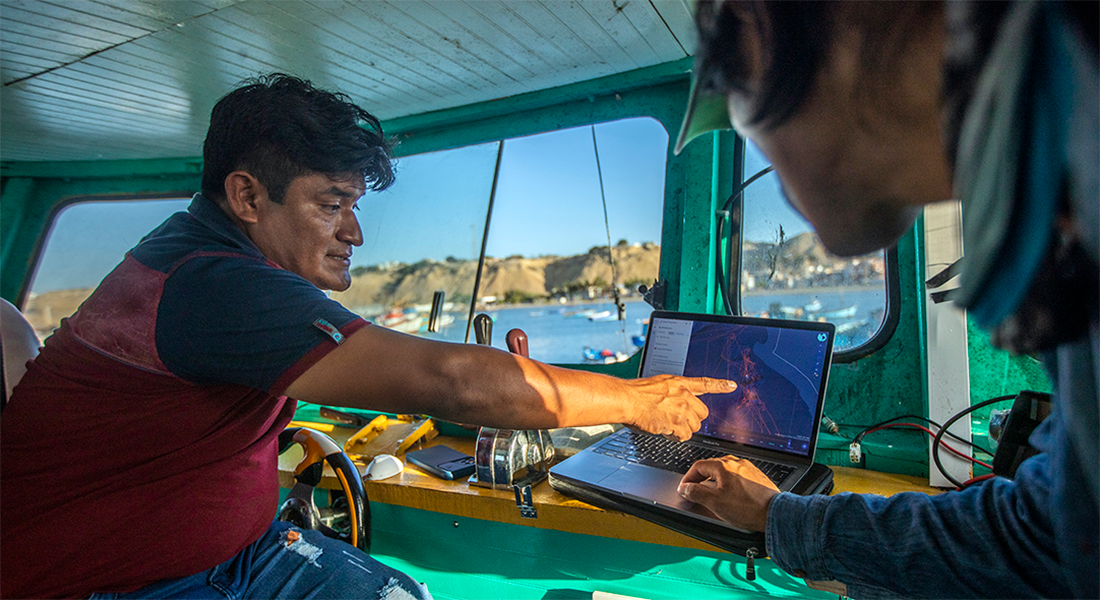
Advancing transparency, accountability, and better outcomes at sea
Across global fisheries — especially in high-risk, high-impact sectors like tuna — one of the biggest barriers to sustainability is visibility. What happens at sea often goes unseen. For distant-water fleets operating far from shore, limited visibility creates challenges for environmental sustainability, compliance, and worker well-being. At the same time, expectations are rapidly evolving.
Regional fisheries management organizations (RFMOs) are strengthening monitoring requirements, while market driven initiatives are calling for higher levels of transparency. Industry commitments — such as the Tuna Transparency Pledge, which aims for 100% on-the-water monitoring coverage across supply chains, and company-led efforts like Thai Union Group’s commitment to expand onboard Wi-Fi connectivity across its tuna supply chains — are accelerating momentum toward more comprehensive oversight, enabling both improved monitoring and stronger communication for crew.
Despite this progress, most fisheries remain far from aspirational levels of coverage. Monitoring systems are often fragmented, pilot-based, and limited in scale, leaving significant gaps in data, accountability and visibility at sea.
At Ocean Outcomes, we are working with partners across industry, government, and fishing communities to help close this gap. From expanding EM access on distant-water vessels to working alongside crew, captains, and communities to facilitate the uptake of new technologies like Wi-Fi, our work adapts best practice to real-world conditions, demonstrating how technologies like EM can drive better environmental and social outcomes.
What is Electronic Monitoring?
Electronic monitoring is a suite of electronic systems and human analysts to record and analyze data of at-sea fishing operations. These systems include video cameras, computer processors and sensors, Global Positioning System (GPS), and can use any combination of a variety of emerging technologies such as the cloud, Artificial Intelligence (AI) and Low Earth Orbiting Satellites (LEO). Together, these systems can allow for remote monitoring and recording of a vessel’s fishing activity.
Increasingly, EM is paired with onboard connectivity via Wi-Fi, allowing for more timely data transmission and moving monitoring closer to real-time oversight. This connectivity also plays a critical role beyond just monitoring. Access to Wi-Fi can improve communication for crew, support reporting and grievance mechanisms, and strengthen broader social responsibility efforts — linking environmental transparency with improved conditions at sea.
Demonstrating what's possible
Across many East Asian fisheries, monitoring coverage remains limited, leaving fishing activity largely unobserved. At the same, a growing pressure from markets, regulators and supply chains is driving a demand for significantly higher levels of transparency.
O2 works with our partners to demonstrate how EM can close this gap in practice. Through our on-the-water pilots, system installations, and direct collaboration with vessel owners and operators, we’re helping to expand EM uptake and test solutions in real-world conditions.
This work is critical to moving EM beyond theory. Our work helps stakeholders understand the what, why and how of EM — application, costs, how it can deliver market value. These demonstrations provide the foundation for broader adoption and help build shared understanding and value among industry and regulators alike.
Establishing frameworks for change

While pilots are essential, scaling EM requires the systems and structures to support it. Across East Asia, adoption is often constrained by lack of clear policy frameworks, limited technical capacity, and uncertainty around standards, data management, and long-term financing. Without these foundations, even successful pilot projects struggle to scale. O2 is working with governments, industry, and academic partners to help establish these enabling conditions for EM adoption. This includes supporting the development of national policy frameworks, convening stakeholder groups, and building in-country capacity for data review, analysis, and system oversight.
In Taiwan, for example, our work is focusing on helping bridge the gap between pilot efforts and national implementation — supporting development of standards, strengthening coordination across stakeholders, and aligning systems with evolving international requirements.
Supporting crew welfare
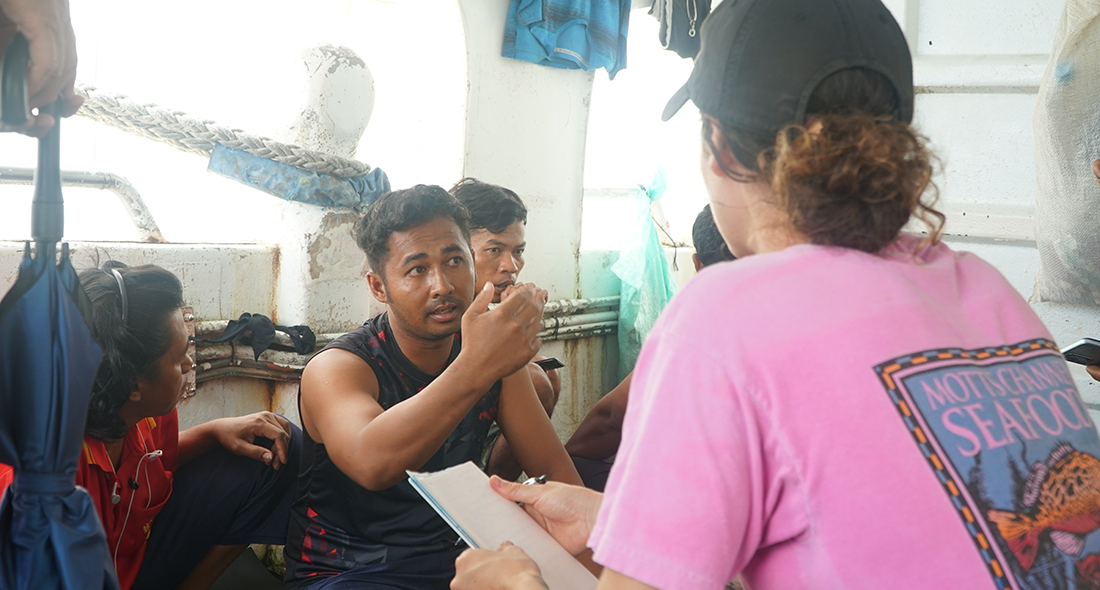
EM can be a powerful tool for improving environmental performance but its potential extends further. In fisheries where oversight is limited, the same conditions that create environmental risks can also contribute to risks for workers.
O2 integrates EM into broader efforts to strengthen social responsibility and human rights due diligence (HRDD) through projects like our Electronic Monitoring and Connectivity for Crews at Sea (EMC4C) project. Through this work, EM systems have been deployed alongside onboard Wi-Fi to better understand how technology can support both environmental monitoring and crew welfare. Early pilots have shown how EM can help detect labor risks and support dispute resolution, while connectivity enables crew to communicate with family, report concerns safely and access critical information about their rights.
In practice, Wi-Fi has proven to be a critical unlock, transforming EM from a monitoring tool into a bridge between vessel and shore. It can enable more timely reporting, strengthen grievance mechanisms, and help reduce isolation for crew working far from land. Using technology not only improves environmental performance but also helps build more transparent, accountable, and equitable fisheries for the people who depend on them.
Stories from the Field: Electronic Monitoring
- Ocean Outcomes and Seafood Legacy Form East Asian Partnership
- EM4Humanity – Technology Meets Labor Rights in Global Fisheries
- Insights from Our Work on the Water — 2025 Reflections and Looking Ahead to 2026
- Ocean Outcomes Collaborates on Groundbreaking Project to Enhance Social Responsibility at Sea
- Building Regional Capacity for Electronic Monitoring Across Taiwan