O2 On the Water: Inside Fisheries, Alongside Crews
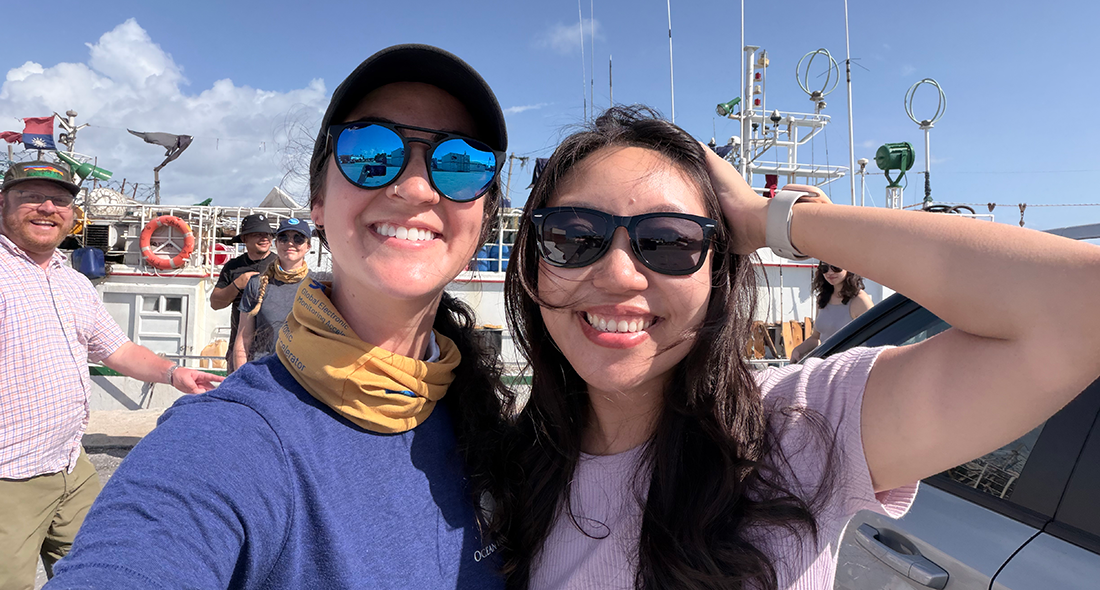
O2’s Social Responsibility Senior Manager, Gabby Lout, and Social Responsibility Coordinator, Mei-Chin Juan get ready to go aboard a longline tuna vessel for the recent Electronic Monitoring and Connectivity for Crews at Sea (EMC4C) Marshall Island Site Visit in Majuro.
Why we go onboard vessels, what we learn there, and how presence builds trust and drives change
At Ocean Outcomes, our approach has always been grounded in three principles: listening, partnership, and persistence. And with these, it’s essential we show up where fishing actually happens, design solutions that work in real-world conditions, and then stay engaged long enough to see those solutions through.
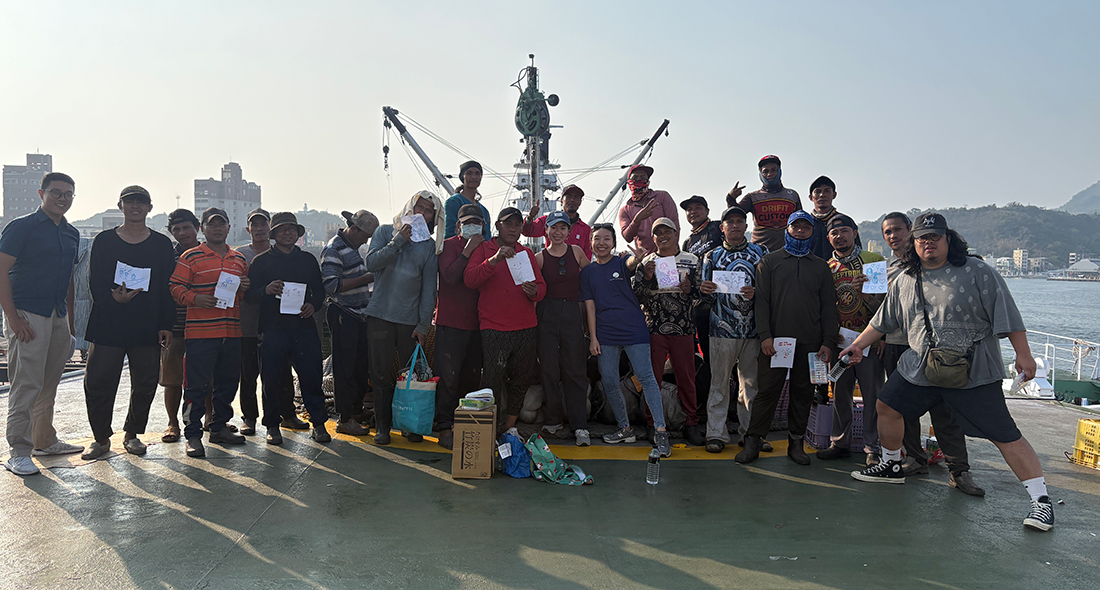
O2’s Mei-Chin Juan stands with crew aboard a Lung Soon Ocean Group vessel, after an EMC4C site visit in Taiwan, working alongside our partners Humanity Research Consultancy, local technology specialists, and interpreters.
Our work bridges the gap between what sustainability frameworks require and what’s actually possible on the water.
Policies, certifications, and market commitments help set best practice expectations and requirements for transparency, traceability, and worker welfare. And translating those expectations into functional systems and change in practice requires understanding the operational realities fishers face including space constraints, connectivity challenges, crew dynamics, and the relentless rhythm of fishing operations.
Life at Sea: Understanding the Reality
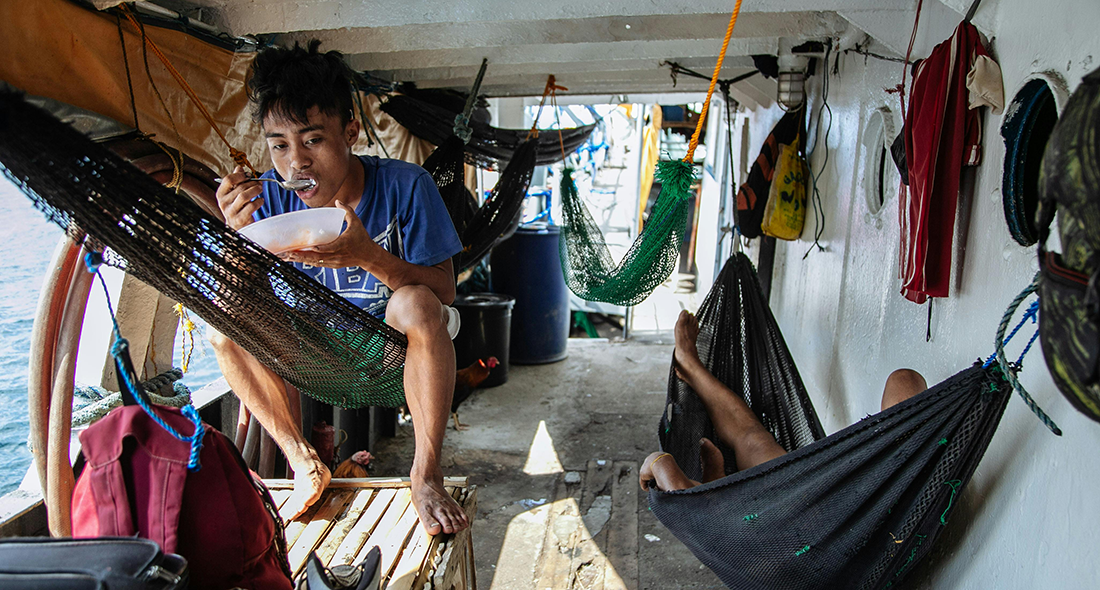
A young fisherman eats while sitting in a hammock on a fishing boat.
A first step in our process is to spend time listening and learning about what life onboard actually looks like. We ask captains and crew what challenges they face, what systems they’re already managing, and what would genuinely help them. We observe workflows, vessel operations, and hierarchies before proposing solutions.
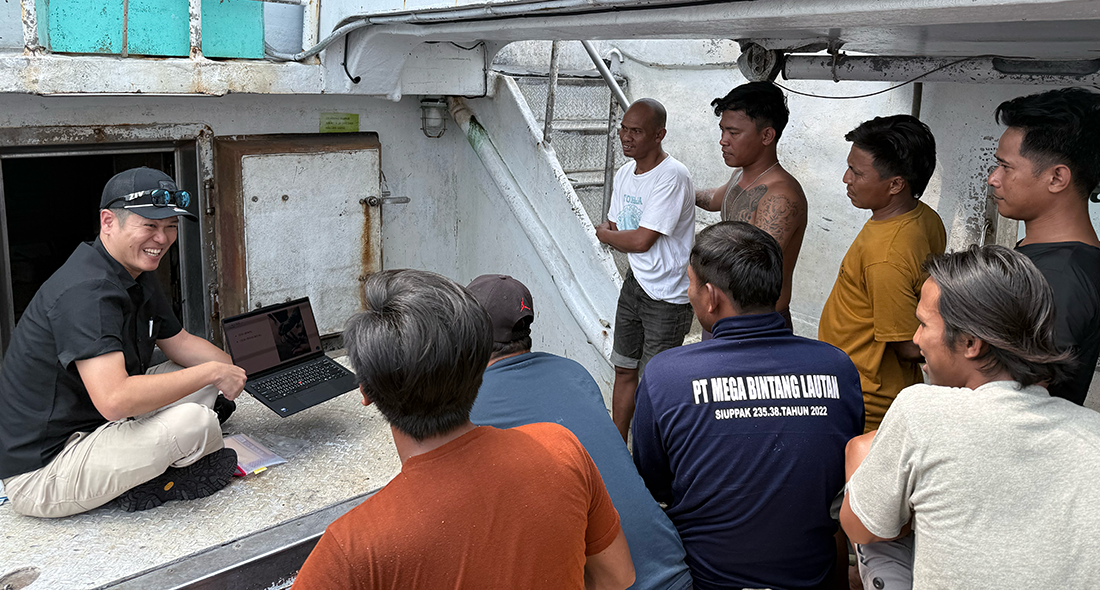
Kevin Lin (left), O2’s Taiwan Fisheries Manager, speaks with members of the crew aboard a Cheng Hung Seafood Frozen (CHSF) vessel during a Fishery Improvement Project (FIP) training.
Crew members might speak multiple languages and hail from different countries than the vessel’s flag state. Captains balance fishing efficiency, safety, compliance, and crew welfare while operating on tight schedules. For those working on the water, the constraints aren’t abstract—they’re the conditions under which any tool, technology, or improvement process has to function.
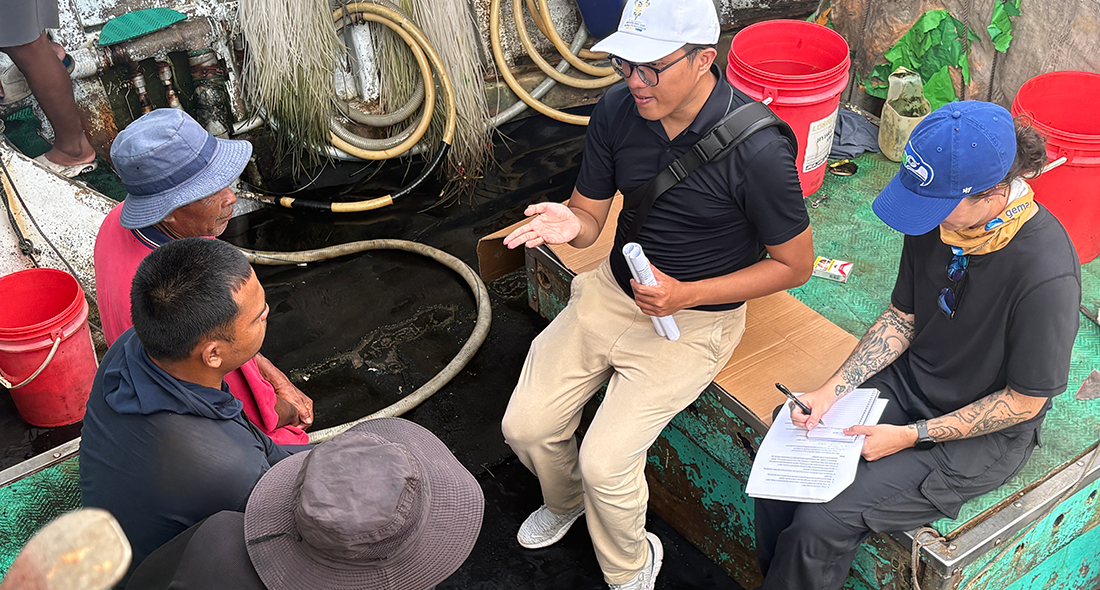
Gabby Lout (right) and project interpreter, Ari, speak with the crew as part of the EMC4C Marshall Island Site Visit in Majuro.
Turning Tools into Practice
Transparency is built, not installed.
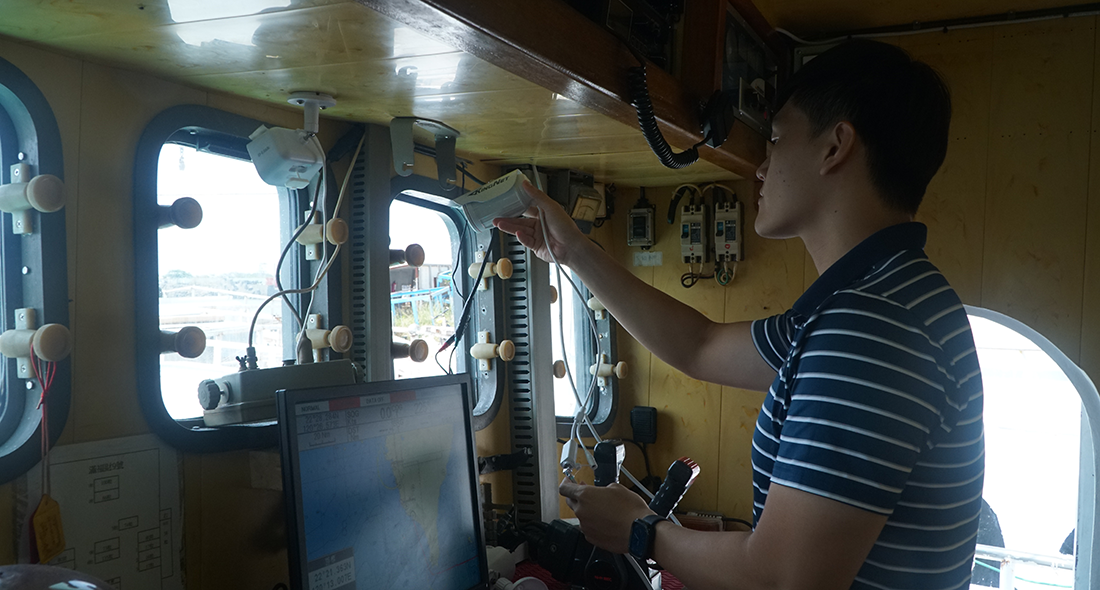
O2’s Taiwan Fisheries Senior Manager, Ho-Tu Chiang, coordinates the installation of electronic monitoring (EM) equipment on a longline tuna fishing vessel.
Installing EM and Wi-Fi systems on a vessel isn’t a plug-and-play process. It requires an understanding of vessel design, high traffic areas, and electrical systems. Equipment needs to function as intended without interfering with operations, impacting the safety of workers, and all while withstanding the harsh, extreme conditions of operating at sea.
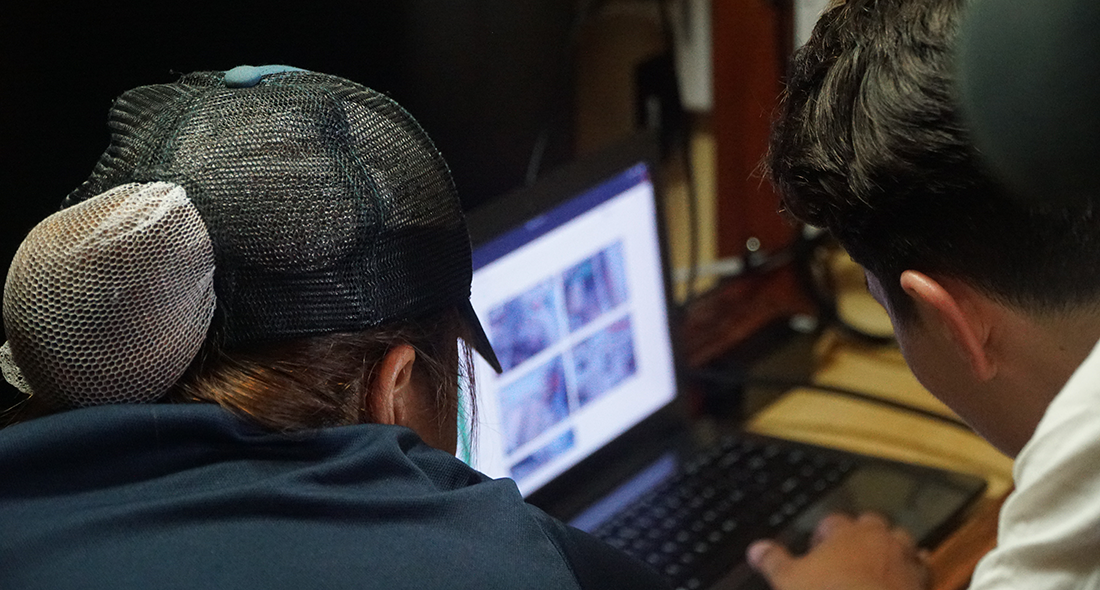
Partners from Conservation International and Satlink test recently installed EM systems onboard a Taiwan-flagged longline vessel as part of our EMC4C work.
Even more importantly, it requires collaboration. O2 works alongside vessel engineers, captains, and technology providers to adapt systems to each vessel’s unique setup, and then troubleshoot in real time and adjust based on feedback. We then work with EM technology providers to train crew and captains on how the systems work, why they matter, and how to address issues when they arise.
Technology only works if it works in practice.
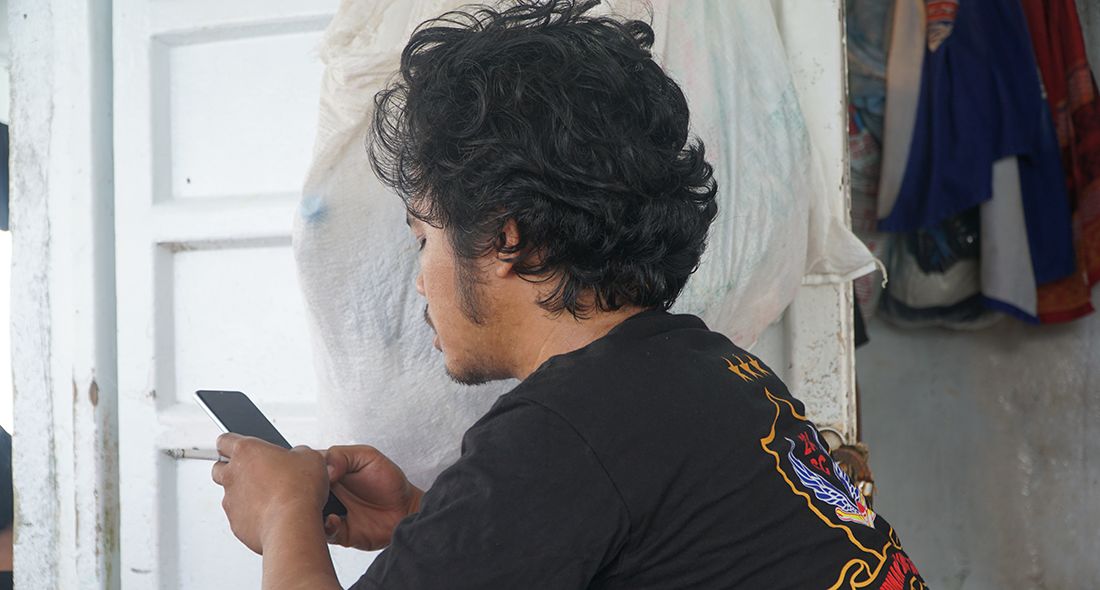
A crew member aboard a longline tuna vessel in Pago Pago, American Samoa, utilizes newly installed on-board Wi-Fi as part of our EMC4C work.
Working with People: Training, Trust, and Engagement
Beyond technology, our larger work is to build understanding, create space for dialogue, and ensure that fishing vessels operate sustainably, and crew members know their rights and how to access support.
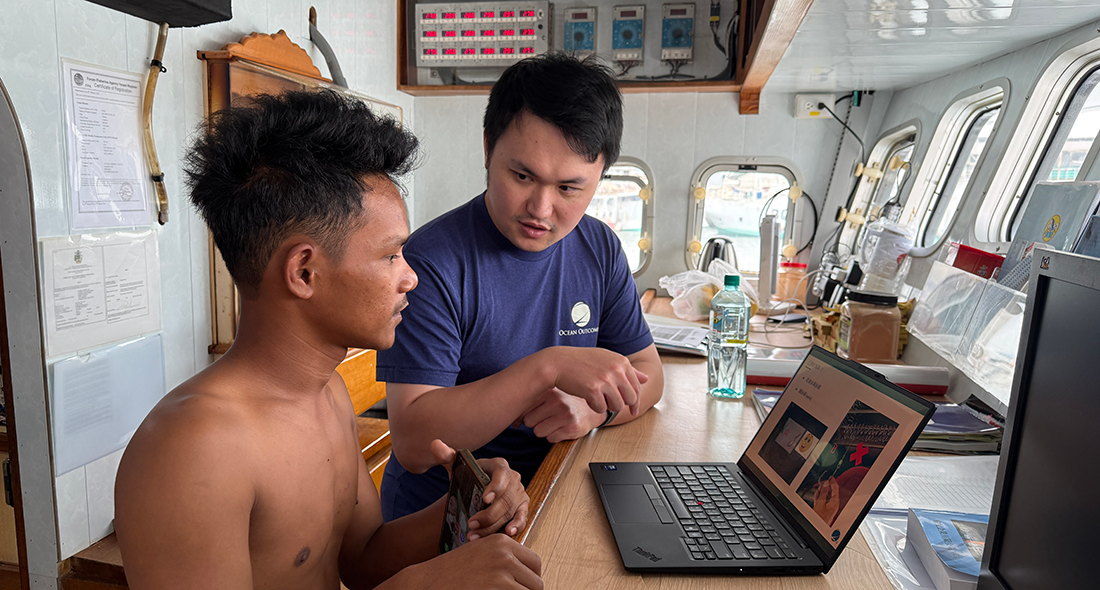
O2’s Asia Fisheries Coordinator, Ryan Xu, working with a member of the crew during a CHSF FIP training, highlighting best practices related to baiting hooks that can reduce unintended and unwanted bycatch.
Our team conducts training on best fishing practices, including how EM supports fisheries management, how Wi-Fi access helps crew stay connected with family and access financial services, and workers’ rights and grievance reporting. We work closely with partners—from NGOs to worker organizations—leveraging one another's expertise and contributions to ensure work is efficient and non-duplicative. We work with interpreters that are embedded within our projects and teams, and create materials that the captains and crew can reference later. These aren’t just one-time sessions, they’re ongoing conversations which support meaningful partnerships.
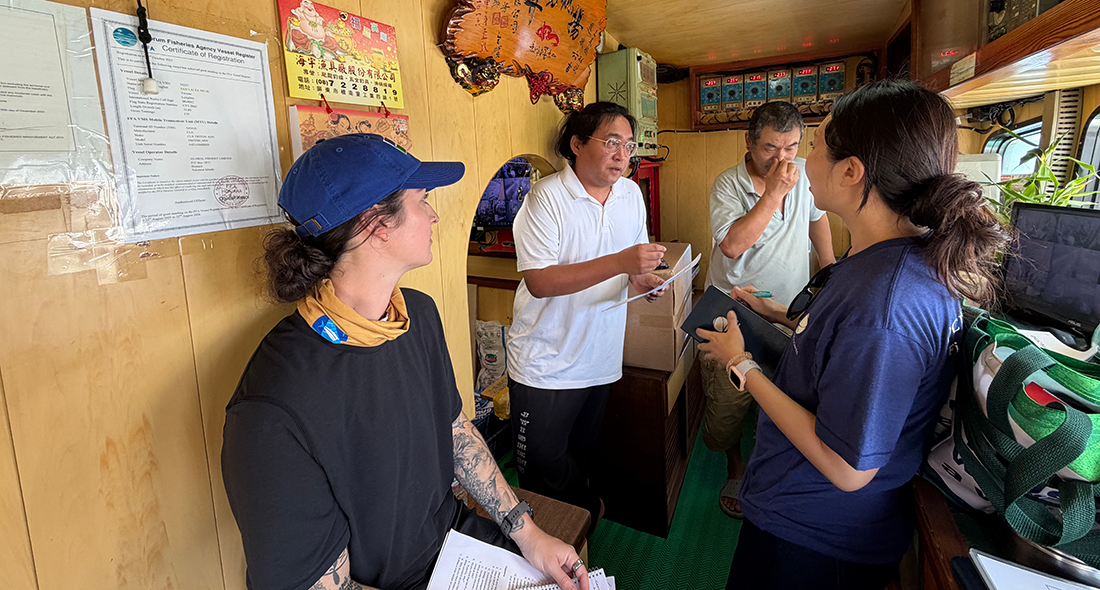
Gabby Lout and Mei-Chin Juan meet with captains as part of the EMC4C project, providing training on onboard Wi-Fi access and crew support systems, clarifying roles and responsibilities, and conducting interviews to better understand onboard experiences and operational needs.
When crew and captains understand why connectivity and monitoring matters, how it protects them, and how it contributes to healthier fisheries and more transparent supply chains, they become active participants in enhancing social responsibility and promoting sustainable practices.
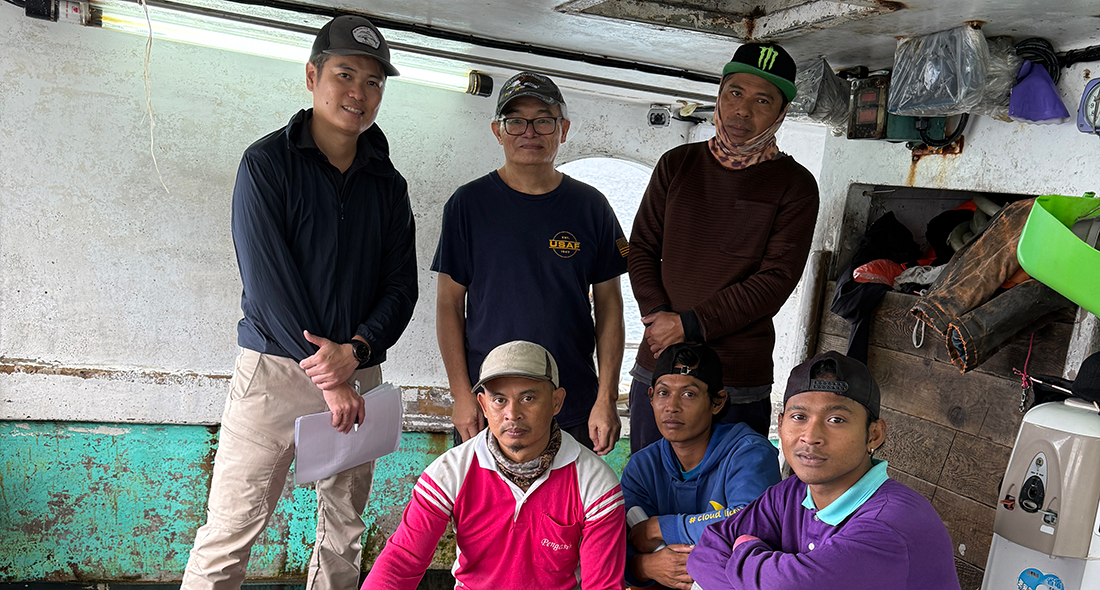
Kevin Lin with crew at a recent Taiwan Tuna Longline Association (TTLA) training covering Social Responsibility Assessments, grievance mechanisms, and Fisher Awareness of Rights (FAR).
The Ripple Effect: From Individual Vessels to Global Systems

The work we do onboard vessels doesn’t just stay there, it flows into the greater good. Onboard work contributes to greater transparency, stronger accountability, and more resilient fisheries.
How? Data collected through EM supports more accurate stock assessments and strengthens fisheries management at Regional Fisheries Management Organizations (RFMOs). Crew feedback informs human rights due diligence efforts and helps companies meet social responsibility commitments. Lessons from installations shape best-practice guidance that other fleets can adopt. And the trust built through direct engagement creates pathways for broader industry collaboration on transparency, traceability, and compliance.
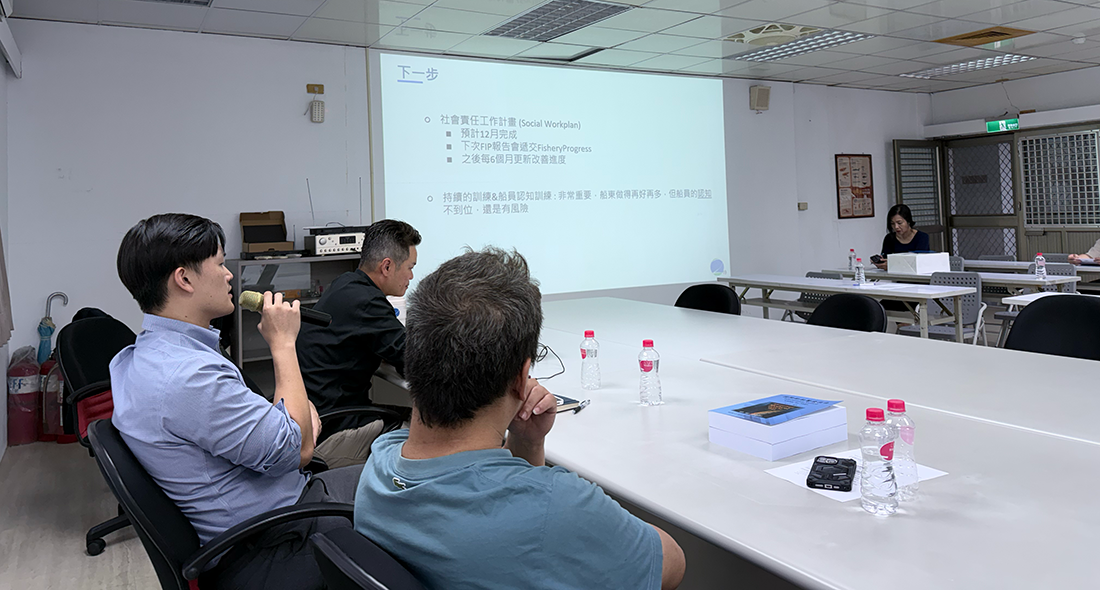
Ho-Tu Chiang opens a Social Responsibility Assessment workshop with the TTLA.
Work at the vessel-level also strengthens policy conversations. When we take our on-the-water learnings and participate in regional workshops on EM standards, or contribute to discussions on labor protections in distant-water fleets, we bring essential insights grounded in real-world implementation—insights that can ultimately inform larger initiatives, regional labor standards, and broader industry engagement.
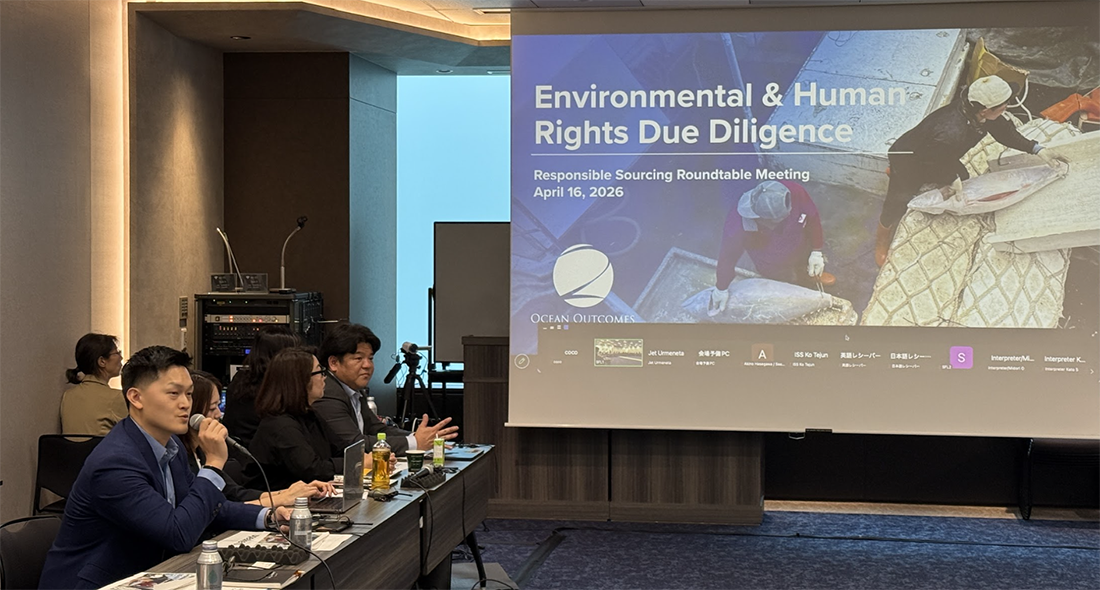
Ho-Tu Chiang speaking during the Responsible Sourcing Roundtable Meeting in Japan, April 2026.
This integration across workstreams (fishery improvement, social responsibility, technology adoption, policy engagement) is what allows individual vessel partnerships to contribute to systemic change in our seafood supply chains, where environmental sustainability and worker welfare are advanced together, not traded off against one another.